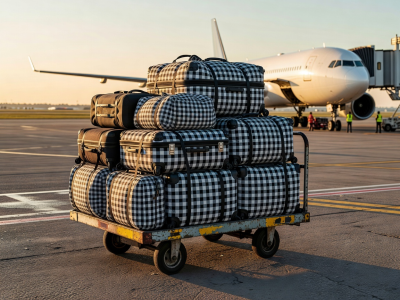
The Reality of Checked Baggage Handling
Unlike a carry-on that remains under your direct supervision, checked luggage faces a harsh environment. Once it vanishes behind the airline check-in counter, your suitcase is subjected to an automated labyrinth of high-speed conveyor belts, mechanical pushers, steep drops, and manual handling by baggage agents under immense time pressure. It may also be exposed to rain or snow on the tarmac. Consequently, durability is the single most important factor when selecting checked luggage.
Size and Weight Restrictions
Before purchasing the largest suitcase available, it is essential to understand standard airline regulations regarding checked baggage. Almost all major airlines enforce a rule known as the "62 linear inch" limit.
Linear inches are calculated by adding the bag's exterior Height + Width + Depth (including wheels and handles). If your bag exceeds 62 linear inches (157 cm), you will likely be charged an oversized baggage fee, which can range from $75 to over $200 per flight sector.
Similarly, standard weight limits apply. For economy class, this is typically 50 lbs (23 kg). For business and first class, it often increases to 70 lbs (32 kg). A massively oversized suitcase is very easy to pack past the 50 lb threshold, leading to hefty overweight fees at the airport. Often, a medium-sized checked bag (around 25-27 inches in height) is a safer, more practical choice than a massive 30-inch trunk.
Material Matters: Surviving the Journey
When selecting checked luggage, you must balance weight against impact resistance. The heavier the bag is when empty, the less you can pack inside it before hitting the airline weight limit.
Polycarbonate (Hardside)
Polycarbonate is generally considered the premier hardside material for checked luggage. Unlike cheaper ABS plastic, which is rigid and prone to cracking upon impact, polycarbonate is engineered to flex. When compressed under heavy weight or dropped, it bends to absorb the shock and then pops back into its original shape. It offers excellent protection for fragile items.
Ballistic Nylon (Softside)
For softside checked luggage, ballistic nylon (often 1050D or higher) is the gold standard. Originally developed for military flak jackets, this densely woven fabric is highly resistant to abrasion, tearing, and punctures. It handles being dragged across rough surfaces far better than cheaper polyester alternatives. Softside bags also typically feature external pockets, which can be useful for last-minute additions.
Component Durability
The body of the suitcase is rarely what fails first; it is almost always the components.
- Zippers: Look for self-repairing nylon coil zippers (such as YKK). Even better are bags that feature double-coil zippers, which prevent a common theft technique involving puncturing the zipper chain with a ballpoint pen.
- Wheels: Look for wheels attached with screws rather than rivets. If a wheel is shattered in transit, a screwed-on wheel can be easily replaced at home with spare parts from the manufacturer.
- Handles: Telescoping handles should be constructed from aircraft-grade aluminum. The housing for the handle should ideally run along the outside edges of the bag's interior to maximize flat packing space and protect the rails from internal pressure.
Security Features
Since you will not be with your bag, integrated locking mechanisms are highly recommended. A built-in, TSA-approved combination lock allows airport security in participating countries to open your bag with a master key for inspection, without cutting your lock or damaging the zipper pulls. For non-zippered hardside luggage (such as aluminum trunks), latch locks provide an incredibly secure seal that is impervious to the ballpoint pen zipper bypass trick.
Investing in a high-quality checked bag means fewer replacements, less anxiety at the baggage carousel, and better protection for the items that matter most on your travels.